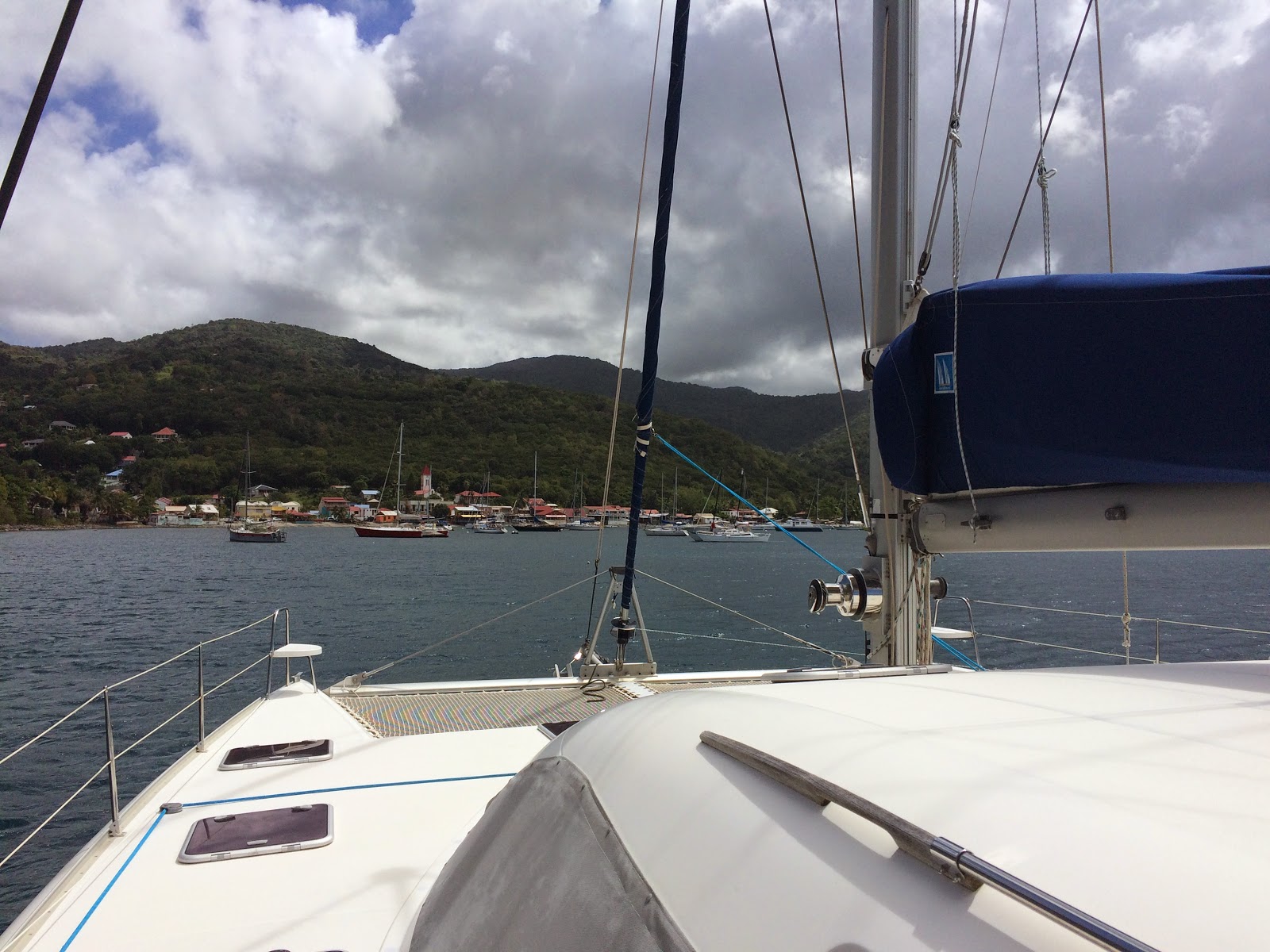
Nevis is an unspoiled island next to St Kitts. It seems very uncrowded, largely because the large cruise ships do not dock here. Only ferries come in from St Kitts.We anchored in the harbor at its capital, Charlestown. The lush landscape, the beaches, and Mount Nevis makes Nevis popular with hikers, snorkelers, and nature fans. The island is small and has only 10,000 inhabitants. The main road that circles the island is only 21 miles long.
We took a day to explore the island. Nevis' history includes Horatio Nelson, the British sea captain who married a local woman in 1787 and died in the Battle of Trafalgar in 1805. It also focuses on Alexander Hamilton, the American statesman, founding father, and first Secretary of State, who died in a duel with his political enemy, Aaron Burr. We visited a cricket sports museum highlighting local and Caribbean sports stars, but for the most part, avoided the museums. Instead we walked around Charlestown, noting the Charlestown Methodist Church, built by freed slaves c. 1844. We also hiked to the ruins at Fort Charles, c. 1628, at the southern end of the island, then turned north and walked along the beach back to Charlestown. Our friend Rich found a beautiful unblemished conch shell on the beach.
It was a great day off from our sailing journey north. Our next destination: crossing to St Marten.
Friday, March 6, 2015
Passing the Island of Montserrat
We were finally ready to leave Deshaies, Guadaloupe for the island of Nevis. Sailing north and west, we passed Montserrat to the east. After a long period of dormancy, the Soufriere Hills volcano on Montserrat became active again in 1995 and continues to spew ash and gasses. We'd been warned to stay two miles out from the west side of the island to avoid collecting ash on the boat. As we passed, we could see the volcano clearly with its peak puffing out smoke and ash. "Soufriere" is a French word meaning "sulphur outlet" and we could smell the sulphur in the air as we sailed.
The eruptions have made more than half of Montserrat uninhabitable. In 1995, the capital of Plymouth was destroyed and about two-thirds of its population, or 7,000 people, left the island. In 1997, the airport was in the lava path and was completely destroyed. Montserrat is a British territory and there was a lot of controversy regarding the effort and amount of aid coming from the British government following the eruptions in 1995-1997. The people even rioted in protest. For the most part, tourism stopped but is now slowly returning.
We never landed on the island, but I took pictures as we sailed past, on our way to Nevis.
Wednesday, March 4, 2015
To Deshaies on the West Side of Guadaloupe
Kent, our friend Rich, and I left Pointe-a-Pitre for Deshaies (pronounced Day-yay), a town and harbor on the west side of Guadaloupe. We sailed south from Pointe-a-Pitre, expecting good wind and an uneventful sail. About an hour out, Kent adjusted the mainsail and the main halyard shredded, making it impossible to raise or lower the mainsail. In 20 knot winds, we were forced to cut the line. Luckily, this was done safely, but we were too far on our way to turn back. Thank goodness for cell phones! We called Pointe-a-Pitre and the woman who sold us our anchor and chain recommended a rigger. So, we contacted the rigger, motored rather uncomfortably to Deshaies, and holed up in their lovely harbor for a couple of days. The rigger finally came with a new line and re-rigged the halyard. Never a dull moment!
In the meantime, we enjoyed Deshaies, a charming and sleepy fishing village with several restaurants and boutiques. It's a working fishing port, but has a nice beach and some trails for hiking and running. Deshaies has a very sheltered bay surrounded by green hills and rock. It was a lovely place to anchor and explore.
I really liked Deshaies and hope the following pictures convey the local color and feel of this quaint little fishing town.
Guadaloupe - A Couple Nights at Dock in Pointe-a-Pitre
We left Les Saintes on a beautiful sunny morning, crossing over north to Guadeloupe. Guadaloupe is an archipelago of islands. Its two main islands look like the wings of a butterfly, joined together by a mangrove swamp. The culture is French Caribbean.
We reserved a spot at the dock in the harbor in Pointe-a-Pitre. It's always nice to stay at the dock once in awhile and treat ourselves to electric and water hookup. Since Guadaloupe is a French island, it meant we had to moor a bit differently than we are used to: tied with stern in and bow lines stretched to mooring balls. There are no finger docks, so the boats are right up against each other, side by side, only separated by fenders. It gave us some good mooring practice! And we enjoyed meeting our French and Norwegian neighbors.
We had two goals during our stay in Point-a-Pitre: buy a new anchor and chain, and take our friend Rich onboard for the next part of our journey. We made our repairs, met up with Rich and stayed two nights. We did have a couple of mishaps that involved both Kent and our dog Trooper falling into the water by accident in separate incidents. No one was hurt, only a little embarrassed, and Trooper sure was surprised!
Our next destination will be Deshaies, a little town and harbor on the west side of Guadaloupe.
Subscribe to:
Posts (Atom)